


This post may contain affiliate links, which earn us commission. Learn more.
The portable audio market has reached a point where it is genuinely difficult to buy a “bad” speaker from a major brand. The baseline for quality has shifted; features that were once premium luxuries—like high-fidelity drivers, fast USB-C charging, and extreme durability—are now standard. Whether you’re at the beach or in a dorm room, today’s top-tier options from brands like Bose, JBL, Sony, and Beats all offer impressive IP67 (dust and splash-proof)orIP68 ratings (fully waterproof).
That said, four models stand out as definitive leaders for 2026. They all balance portability with powerful sound, and most importantly, they all come in under the $200 mark.
Bose SoundLink Flex Portable Speaker (2nd Gen)
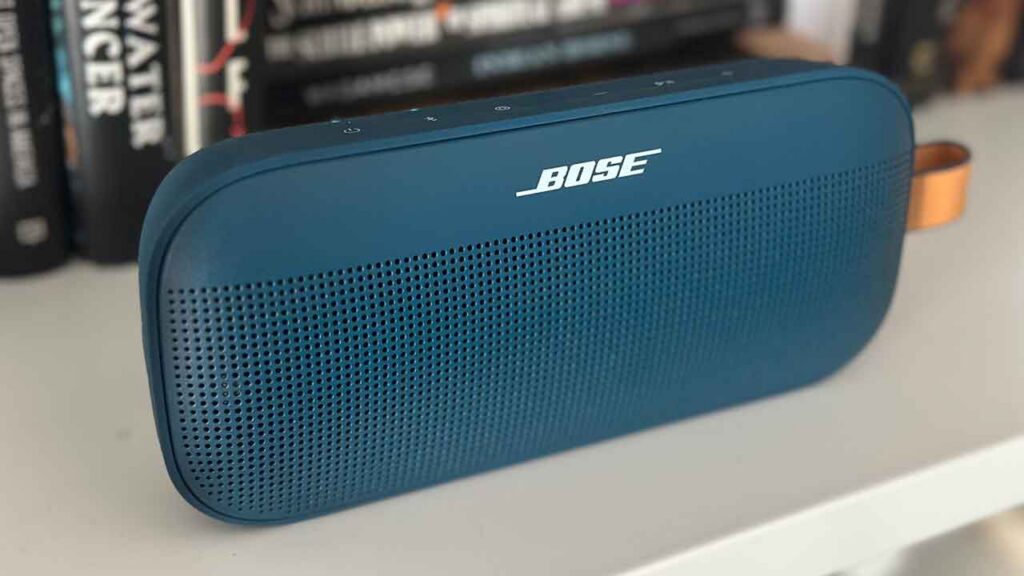
Bose continues to lean into its signature sound profile with the second-generation Flex. It remains a top choice for those who prefer a “big” sound from a small footprint.
- Sound Profile: This speaker is defined by its pronounced bass, a long-standing strength of the Bose line. It offers a notably warmer tone than its competitors, making it ideal for indoor listening or rich acoustic tracks. If you find it a little too warm, the EQ is easily adjustable via the Bose app.
- Key Features: It features PositionIQ technology, which automatically detects the speaker’s orientation (upright, hanging, or flat) to optimize the sound output.
- The Caveat: We encountered persistent issues with Bluetooth multipoint when switching between multiple iOS devices. The “handoff” often fails, or the device refuses to connect without a manual reset. We have even seen instances of the device freezing entirely. While a future firmware update may fix this, it’s a point of frustration for multi-device users.
- Best for: Users who love the Bose sound and want a small-but-mighty speaker with extreme packability.
Beats Pill
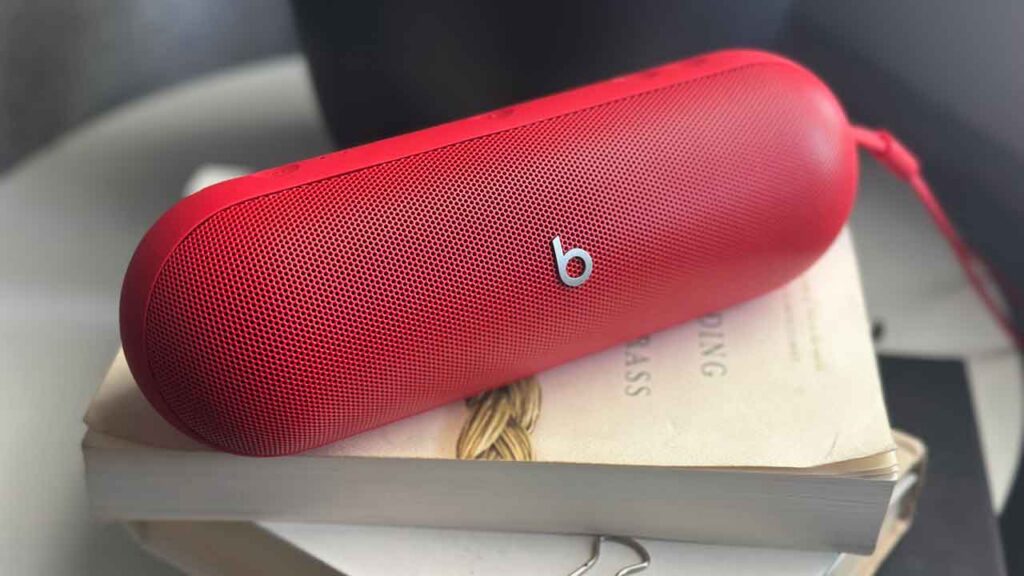
The latest iteration of the Beats Pill (a name we still find a bit awkward) has moved away from the bass-heavy reputation of the brand’s early days, pivoting toward a more clinical, precise sound.
- Sound Profile: In contrast to the Bose, the Pill is brighter and more technical. Vocals are exceptionally clean and forward, making it a fantastic choice for podcasts or vocal-heavy pop. However, those looking for a “lush” audiophile experience might find it a bit thin compared to the warmer Bose.
- Key Features: It supports USB-C lossless audio for wired listening (though we couldn’t get this to work on iOS for some reason) and boasts an impressive 24-hour battery life. You can also pair two Pills for true wireless stereo playback.
- The Caveat: The physical interface leaves something to be desired. The power button requires an awkwardly long press to toggle, and since that same button handles Bluetooth pairing, it is far too easy to accidentally trigger pairing mode when you’re just trying to turn it on. Additionally, the companion app remains fairly basic compared to JBL or Sony.
- Best For: All-day listening to vocal-heavy tracks and podcasts.
JBL Flip 7
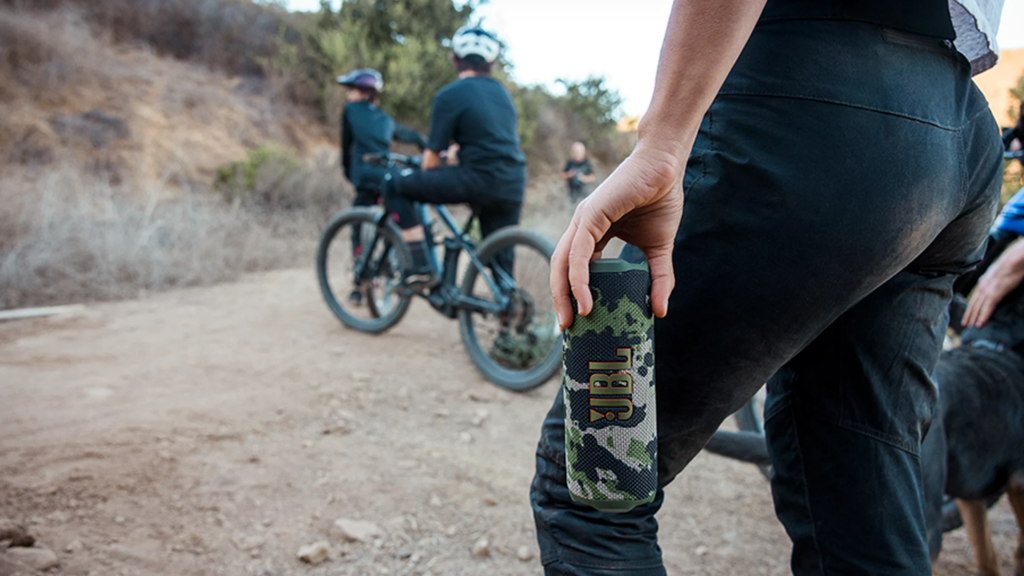
The JBL Flip 7 remains the “gold standard” for the average consumer, largely because it is built to be nearly indestructible and delivers an incredibly energetic performance.
- Sound Profile: The Flip 7 introduces AI Sound Boost, which analyzes your music in real time, allowing it to push higher volumes with almost zero distortion. It has more “punch” in the mid-bass than the Bose, though it lacks the high-end sparkle of the Beats Pill.
- Key Features: This model upgrades to an IP68 rating and includes a new PushLock system, which allows you to swap between a fabric handle and a carabiner. Whats more, you can connect two Flip 7’s for a stereo experience, or multiple Auracast enabled JBL speakers to cover more ground.
- The Caveats: Sadly, the Flip 7 can’t pair with older models, it lacks speakerphone, the “playtime boost” which extends the playtime by an advertised 2 hours makes the EQ “thin”, and music becomes a bit piercing at higher volumes.
- Best For: Despite the caveats, if your goal is to have a virtually indestructible speaker that sounds great at normal volumes, this might be your ticket.
Sony ULT FIELD 3
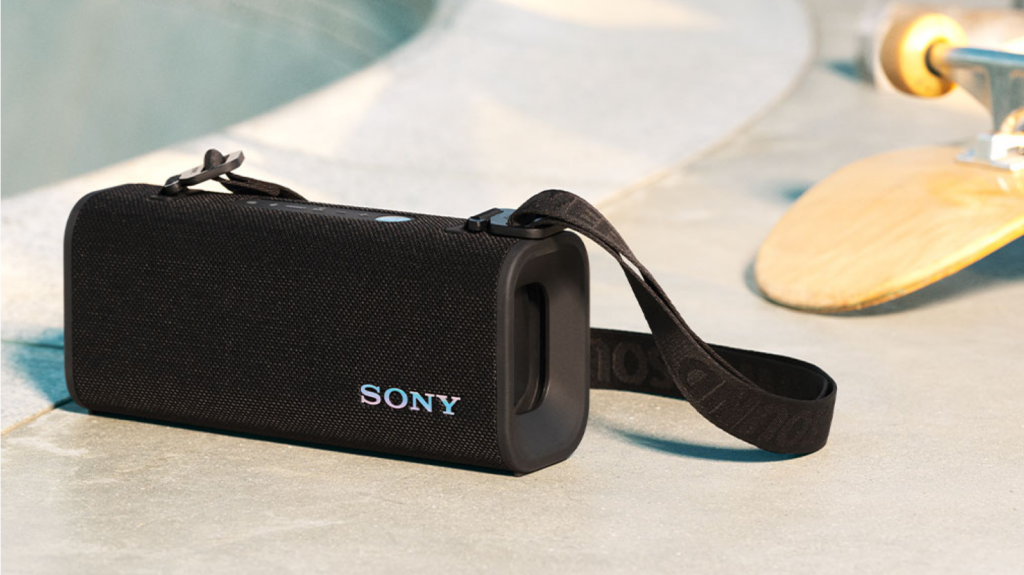
Part of Sony’s “ULT Power” rebrand, the FIELD 3 is designed for those who believe there is no such thing as “too much bass.”
- Sound Profile: Without the “ULT” mode engaged, the speaker is relatively balanced, if a bit hollow. With the mode on, the FIELD 3 produces a deep, vibrating low-end that mimics the feel of a much larger speaker cabinet. It features a 7-band EQ in the Sony Sound Connect app to help refine the boominess.
- Key Features: Speakers in this series have a dedicated bass-boost button (that’s the “ULT”). A fun feature when you really want to get the party started. It comes with a branded strap so you can easily sling the speaker when you’re out and about and has a massive 24-hour battery life which may account, in part, for its weight.
- The Caveats: It is the heaviest of the four (approx. 3lbs), making the shoulder strap more of a necessity than a fashion statement. The bass boost (ULT Power) is a bit of a gimmick, making some tracks “muddy”.
- Best For: Bass-heads who need all-day battery life for long trips or weekend camping.
Quick Comparison: Top Picks of 2026
| Speaker | Price (MSRP) | Key Strength | Battery Life | Durability |
| Bose SoundLink Flex 2 | $149 | Warm, rich bass | 12 Hours | IP67 |
| Beats Pill | $149 | Vocal clarity | 24 Hours | IP67 |
| JBL Flip 7 | $149 | Wired Lossless / Auracast | 14-16 Hours | IP68 |
| Sony ULT FIELD 3 | $199 | Extreme Bass / Longevity | 24 Hours | IP67 |